Self-Hosted n8n on Kubernetes Production Guide
Sasha Ray
9th Aug, 2026
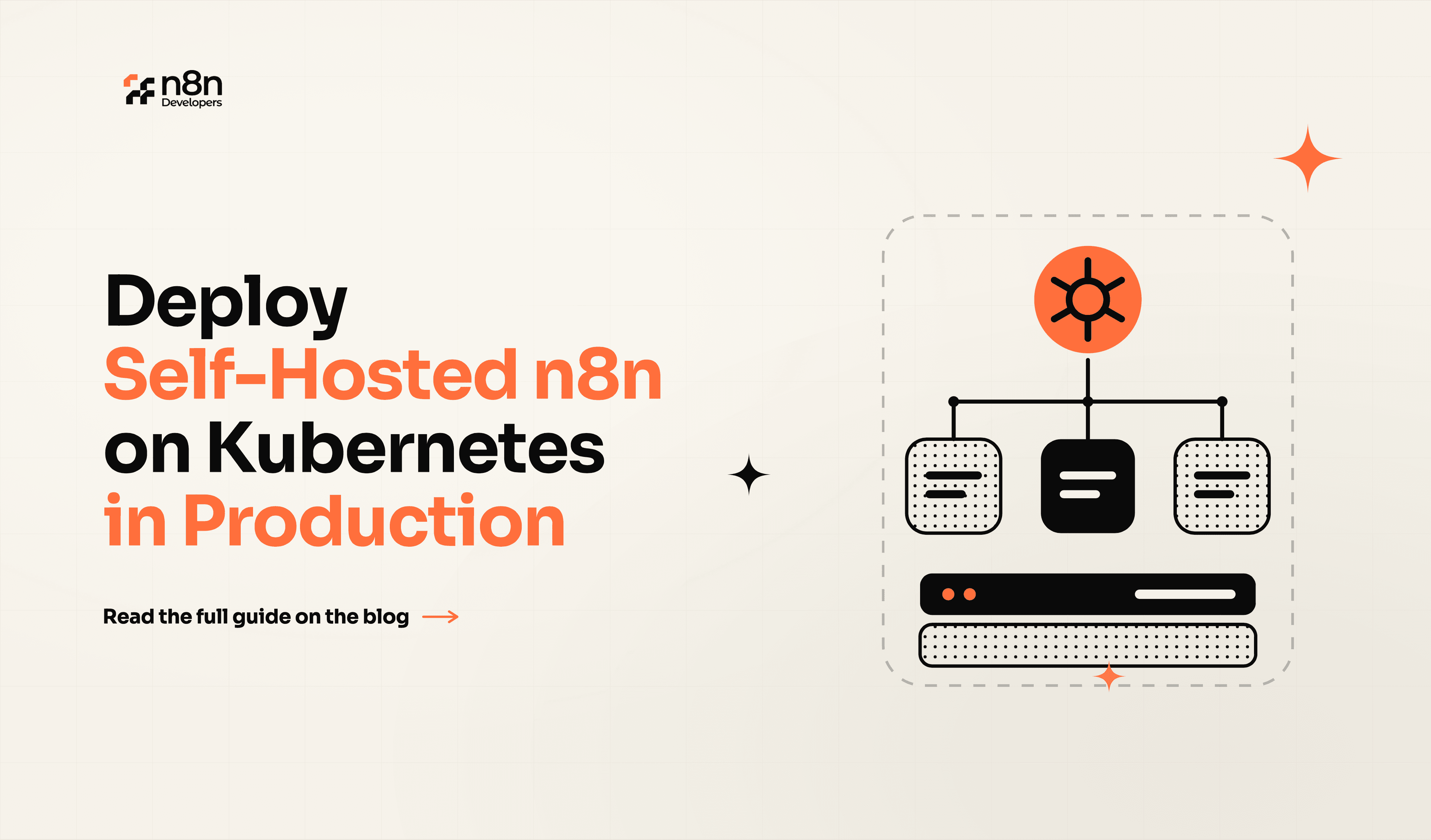
Self-Hosted n8n on Kubernetes: Production Guide
Running n8n gives organizations complete control over workflow automation, security, scaling, and infrastructure management.
Instead of depending on managed services, Kubernetes allows businesses to deploy automation in highly available production environments while maintaining compliance and predictable operating costs.
Whether you're automating APIs, CRM systems, ERP platforms, AI services, or internal business operations, Kubernetes provides reliability that traditional single-server deployments cannot match.
This guide explains how to build a production-ready deployment from infrastructure to monitoring, scaling, security, and maintenance.
Why Choose Self-Hosted n8n on Kubernetes
Running Self-Hosted n8n on Kubernetes offers greater flexibility than deploying on a single virtual machine.
Organizations can:
Scale automatically
Increase uptime
Improve security
Simplify maintenance
Reduce downtime
Automate deployments
Roll back updates safely
Integrate with enterprise infrastructure
Benefits include:
Horizontal scaling
Load balancing
Rolling updates
Zero-downtime deployments
Built-in self-healing
Secret management
Resource isolation
Better monitoring
Enterprise-grade reliability
Kubernetes also supports multi-node clusters, making it easier to handle thousands of workflow executions every day.
Planning Your Kubernetes Architecture
Before deployment, plan the cluster architecture carefully.
A production environment should include:
Kubernetes Cluster
Ingress Controller
Load Balancer
PostgreSQL Database
Redis Queue
Persistent Storage
TLS Certificates
Monitoring Stack
Backup System
Recommended architecture:
Internet
│
Load Balancer
│
Ingress Controller
│
n8n Pods
│
Redis Queue
│
PostgreSQL Database
│
Persistent Storage
Avoid storing production data inside containers.
Instead, use persistent volumes or managed storage classes.
Installing n8n in Kubernetes
Deploying n8n begins with preparing the namespace.
Example:
kubectl create namespace n8n
Create Secrets:
apiVersion: v1
kind: Secret
metadata:
name: n8n-secret
type: Opaque
data:
DB_PASSWORD: base64password
Deploy ConfigMaps:
apiVersion: v1
kind: ConfigMap
metadata:
name: n8n-config
Deployment example:
replicas: 3
strategy:
type: RollingUpdate
Expose using:
Service
Ingress
TLS
This creates a highly available deployment.
Security Best Practices
Production security should never be optional.
Recommendations include:
HTTPS only
TLS certificates
Secret Manager
Network Policies
RBAC permissions
Disable root containers
Read-only filesystem
Container image scanning
OAuth authentication
API authentication
Environment isolation
Limit Kubernetes permissions using least-privilege access.
Never store passwords inside deployment files.
Scaling for Production
Production automation workloads change throughout the day.
Horizontal Pod Autoscaler can automatically scale based on CPU usage.
Example:
minReplicas: 2
maxReplicas: 10
Cluster Autoscaler can also increase worker nodes automatically.
Benefits include:
Better performance
Lower latency
Reduced failures
Higher availability
Cost optimization
Large enterprise environments often separate execution workers from the editor instance.
Monitoring and Logging
Monitoring helps detect problems before users notice them.
Recommended tools:
Prometheus
Grafana
Loki
Elasticsearch
Fluent Bit
Kubernetes Dashboard
Monitor:
CPU
Memory
Workflow failures
API latency
Queue length
Database performance
Storage usage
Create alerts for:
Pod crashes
High memory
Database failures
Failed workflows
Certificate expiration
Backup and Disaster Recovery
Every production deployment needs backups.
Protect:
PostgreSQL
Redis
Persistent Volumes
Secrets
ConfigMaps
Recommended backup frequency:
Hourly database snapshots
Daily storage backup
Weekly full cluster backup
Test restoration regularly.
Backups are valuable only when recovery works.
CI/CD Deployment Pipeline
Modern deployments use GitOps or CI/CD pipelines.
Typical workflow:
Developer
│
Git Repository
│
GitHub Actions
│
Docker Build
│
Container Registry
│
Kubernetes Deployment
Automate:
Testing
Security scanning
Image building
Deployment
Rollback
This reduces manual errors.
Performance Optimization
Improve workflow execution by:
Using Redis queue mode
Optimizing PostgreSQL
Limiting unnecessary workflow polling
Increasing worker replicas
Caching API responses
Monitoring resource requests
Setting CPU limits
Setting memory limits
Regular performance testing prevents production bottlenecks.
Enterprise Support
Many organizations prefer working with a Hire n8n agency for production deployment, infrastructure design, Kubernetes optimization, workflow architecture, API integration, security reviews, and long-term maintenance.
N8n Developers provides Information technologies and developers who build enterprise automation platforms, cloud-native deployments, Kubernetes environments, AI integrations, and scalable workflow solutions for businesses of every size.
Whether you need implementation, migration, monitoring, or continuous improvements, choosing a Hire n8n agency reduces deployment risk and accelerates production readiness.
Why Businesses Choose Kubernetes for n8n
Kubernetes delivers:
High availability
Automatic recovery
Better scalability
Infrastructure portability
Secure deployments
Easier upgrades
Centralized monitoring
Enterprise reliability
As automation workloads grow, Kubernetes becomes the preferred platform for long-term operations
Frequently Asked Questions
Kubernetes provides high availability, automatic scaling, and reliable production deployments.
Yes, when configured with HTTPS, secrets management, RBAC, and regular updates.
PostgreSQL is the recommended database for production deployments.
Yes, Horizontal Pod Autoscaler can scale workloads based on resource usage.
Yes, a Hire n8n agency helps design secure, scalable, and production-ready automation environments.